
Media
Welcome to our media center. Browse news, videos, and articles.
News

Sharing: Innocence Project Client – Alan Newton Exonerated!
“When you’re incarcerated, it gets harder to defend yourself because you’re really dependent on other people to do all the leg work for you, find the witnesses and make the case.” On July 6, 2006, Alan Newton was exonerated of rape, robbery, and assault charges. He had asked for DNA
EVENT PICTURE: Nicki, Carlos Arzate, Louis Taylor, Lindsay Herf (left to right)
A photo of our good friend and supporter Nicki, Carlos Arzate from the band “Carlos Arzate and the Kind Souls,” our former client Louis Taylor, and former JP DNA Project Manager and current Co-Director of the Wrongful Conviction Clinic at UofA, Lindsay Herf. Taken at a concert where Carlos Arzate

SAVE THE DATE: September 18, 2015 – Book Signing for Bills, Quills, and Stills: An Annotated, Illustrated, and Illuminated History of the Bill of Rights
Book Signing for “Bills, Quills, and Stills: An Annotated, Illustrated, and Illuminated History of the Bill of Rights” & Presentation by Robert J. McWhirter – Just What’s So Exceptional About America?: Rights, “the People”, and the Bill of Rights Where: Changing Hands Bookstore Phoenix, 300 W Camelback Rd, Ste 1 Phoenix, AZ

Can We Trust Crime Forensics?
by Michael Shermer The criminal justice system has a problem, and its name is forensics. This was the message I heard at the Forensic Science Research Evaluation Workshop held May 26–27 at the AAAS headquarters in Washington, D.C. I spoke about pseudoscience but then listened in dismay at how the
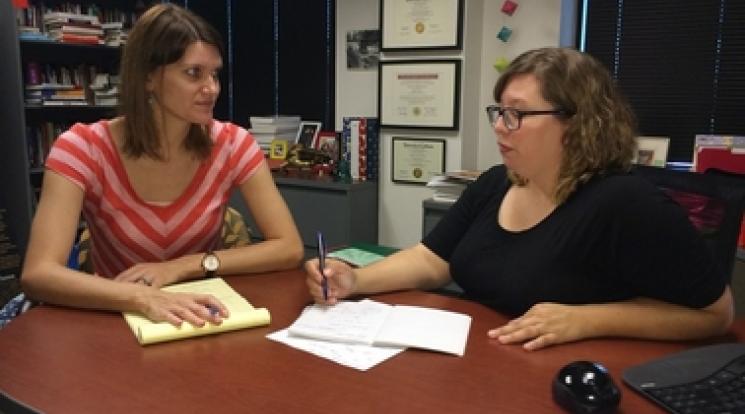
ASU criminologists examine why some parolees fail after release from prison
ASU criminology and criminal justice professors Alyssa Chamberlain and Danielle Wallace wanted to find out how the release of large numbers of parolees in a concentrated area affected their chances of returning to prison. To do this, they examined data from three Ohio cities, Columbus, Cincinnati and Cleveland, from 2000
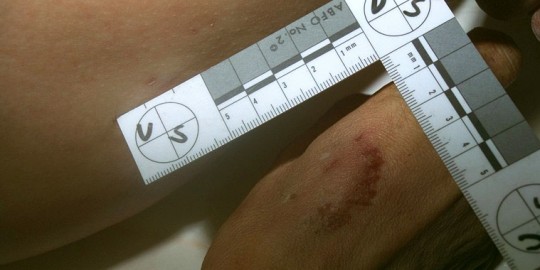
Bitten by Experts via The Intercept
An article in the The Intercept takes a detailed look at the flawed science of bite mark analysis and the case of Bill Richards, a California man who was convicted in 1997 of murdering his wife, Pamela. […] As numerous cases like Richards’ have emerged over the years, some odontologists
Articles
Perry v. New Hampshire and Eyewitness Testimony
In a case that was recently argued before the Supreme Court, questions have arisen regarding the reliability of eyewitness testimony. In Perry v. New Hampshire, the State Supreme Court ruled that a trial judge “cannot exclude witness identification based on suggestive circumstances, unless there was improper police manipulation of the
Wrong Convictions Spur Florida to Rethink Using Jail Informants
After the release of a man that was wrongfully convicted of a murder, Florida’s Innocence Commission is rethinking the use of jailhouse informants in their felony cases. The man, Chad Heins, spent 11 years in prison for a murder he was innocent of — his conviction was almost solely based on the
Injustice in Murder Cases
According to a new study recently published by the RAND Corporation, just providing an indigent defendant a lawyer is not enough to “obtain justice”. The issues that directly affect the outcome include: whether the lawyer assigned is screened for quality, whether they are trained to handle the client’s type of case,
Prosecutorial Misconduct and a DNA Exoneration in Texas
After spending 25 years in prison for a crime he did not commit, Michael Morton was exonerated last month in Texas through the use of DNA evidence. In their attempt to prove Mr. Morton’s innocence, attorneys found evidence in court records that the prosecutor from his original trial had withheld critical evidence
The Arizona Justice Project is Appearing Before the U.S. Supreme Court
Bob Bartels, faculty advisor for the Arizona Justice Project, takes the important issue of post-conviction review to the United States Supreme Court. – Question Presented: Whether a defendant in a state criminal case – who cannot raise an ineffective assistance of trial counsel claim (IATC) on direct appeal but must
Understanding the Causes of Wrongful Convictions
Below, you’ll find an interactive resource courtesy of the Innocence Project in New York about the causes of wrongful convictions: The Innocence Project has also released a chart on the DNA exonerations that have occurred throughout the nation in which convictions were obtained involving unvalidated or improper forensic testing. Read more about 166