

Nicole Ludden, Arizona Agenda
Originally published July 28th, 2025
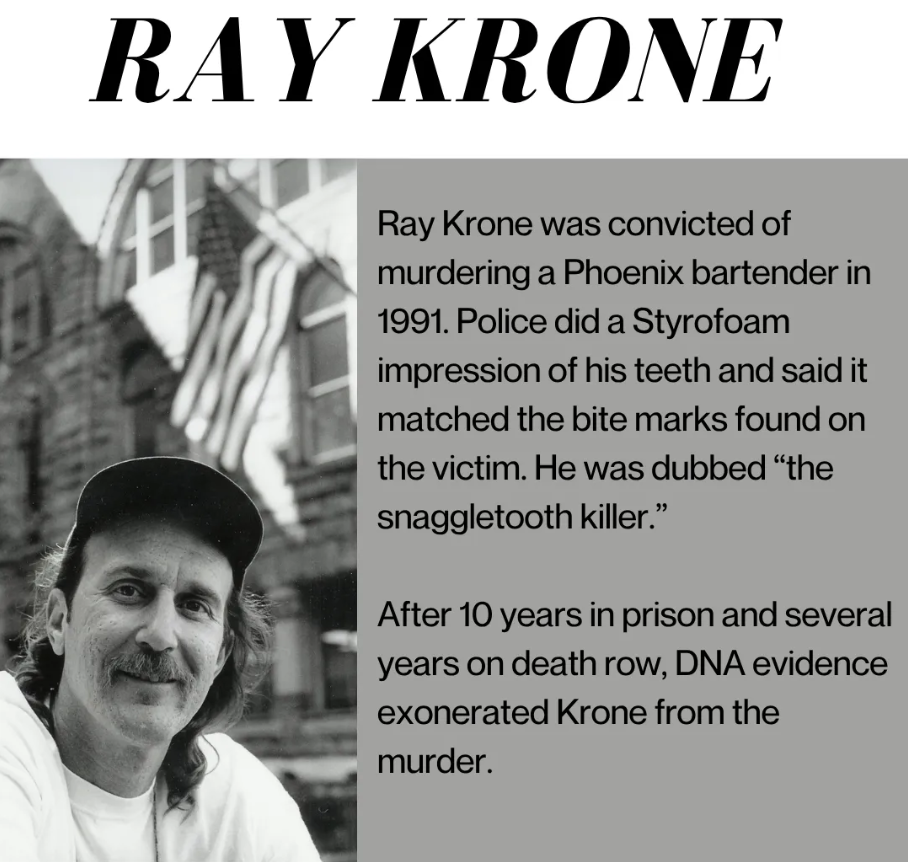
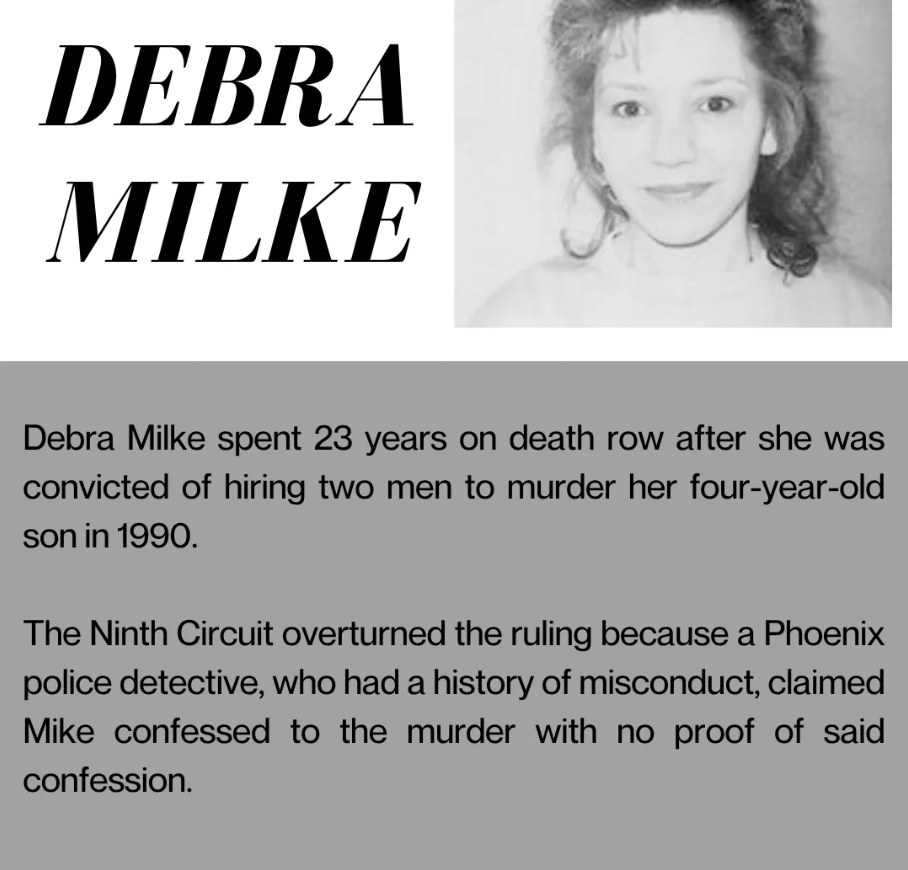
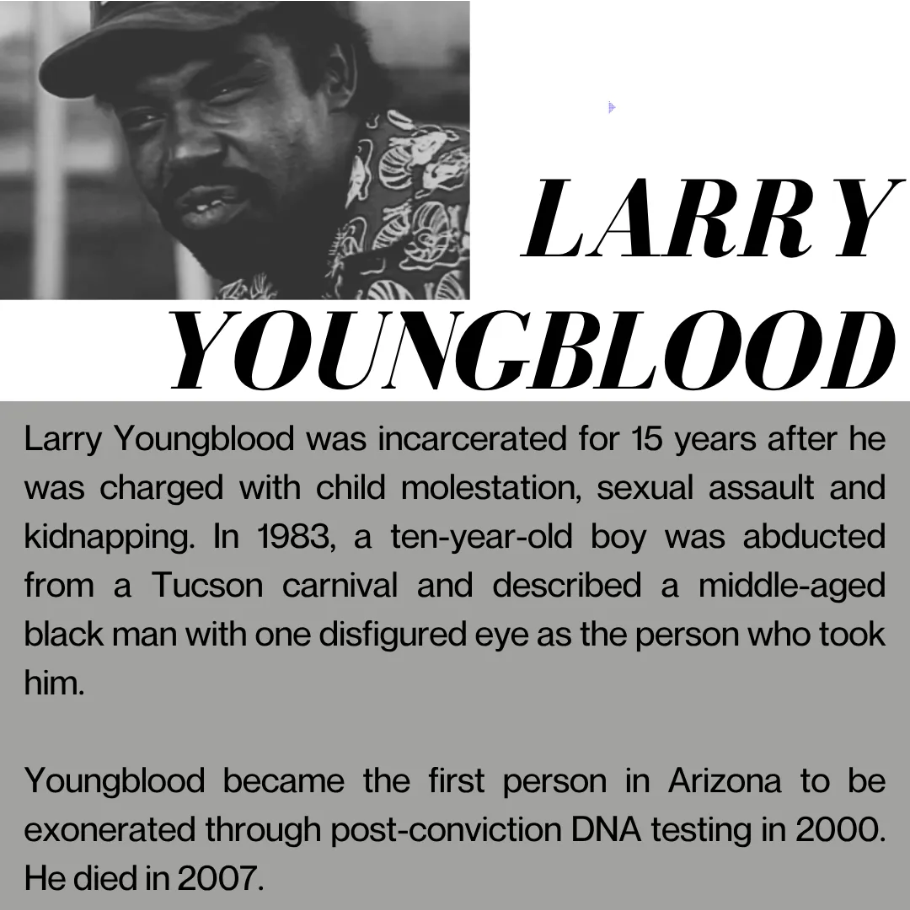
Next year, Arizona will start the process of compensating people who’ve been incarcerated for crimes they didn’t commit.
We told you about the push for an erroneous convictions law back in March. But the version that ended up getting signed into law amid the end-of-session chaos has a few key differences from the original plan.
The actual compensation hasn’t changed: Those who were wrongfully convicted are eligible for whatever 200% of Arizona’s median household income was each year they were incarcerated1. The new law also provides mental health treatment, postsecondary education and financial planning courses, and there are higher payout amounts for people who were on death row or registered as a sex offender.
But for now, the law is in a one-and-a-half-year test run.
If lawmakers want to continue the program beyond that — and permanently join 40 other states and the federal government in providing restitution for taking away years of people’s lives — they’ll have to offer a bill to extend it during next year’s legislative session.
Hope DeLap, the strategic litigation counsel for the Arizona Justice Project, said the bill’s backers are still working out how the compensation fund should work and where it should come from. When the law takes effect on Jan. 1, the money will come from a new “erroneous convictions fund” that lawmakers put $3 million into this fiscal year. Everyone who already qualifies under the law will have two years from that start date to file a claim.
Someone can apply for compensation if they were incarcerated for a felony crime they didn’t commit, as long as they didn’t commit perjury that led to the conviction. To prove they didn’t commit the crime, the claimant has to show one of the following:
They were pardoned based on innocence.
Their conviction was overturned, and the charges were dismissed.
Their conviction was reversed or vacated, and they entered an Alford plea or no contest plea while maintaining innocence.
The Arizona Justice Project has been trying to set up a statewide system to compensate falsely convicted people for more than a decade.
The earliest “erroneous convictions” law we found was sponsored by then-Democratic Rep. Kyrsten Sinema in 2010, and it doesn’t have a formal compensation plan.
DeLap worked with lawmakers and criminal justice system stakeholders to finally get it done this year, but she credits a Gilbert-based freshman lawmaker, Republican Rep. Khyl Powell, for delivering the final push.
Powell sponsored the original version of the bill, HB2813, which made it through the House with unanimous support. But Republican Sen. Wendy Rogers refused to give it a hearing in the Senate Judiciary Committee, which she chairs.
So Powell revived it with a last-minute, late-night strike-everything amendment to another bill, SB1500.
It was the last piece of legislation the House passed this year, and it earned him a round of thanks from his colleagues, who voted for it 55-1.
Democratic Rep. Sarah Liguori said, “I don’t think I’ve ever seen someone move mountains in the way that he did,” while Freedom Caucus Rep. Alexander Kolodin commended Powell “for his tenacity.”
In the Senate, it barely squeaked by, as all but a handful of Republicans voted against it.
Powell doesn’t fit the stereotype for championing criminal justice reform. He runs an industrial real estate development company, and his campaign website lists past roles in the FBI and Phoenix Police Department.
But he also used to minister in prisons and previously told us that he felt “hopeless” when he thought some of the people he encountered there were innocent.
But to survive the legislative gauntlet, Powell and the Justice Project had to make concessions.
Now, instead of placing the burden of proof on the Arizona Attorney General’s Office, the claimant has to prove “by a preponderance of the evidence” that they didn’t commit the crime they were convicted for. DeLap said that’s standard in other states with compensation laws.
And if the court finds that city or county employees caused the main missteps that led to a wrongful conviction, the new law says that local government entity has to pay for the compensation. In many cases, wrongful convictions trace back to city police and county prosecutors.
And perhaps the biggest change from the law’s original version is that it now comes with an expiration date.
The law is set up as a pilot program to see how compensation plays out in the courts before making it an ongoing program. The law ends on Jun. 30, 2027, unless lawmakers vote to extend it.
The Legislature’s financial experts estimated the previous version of the bill would cost the state $641,000 per year based on 24 Arizona exonerations reported by the National Registry of Exonerations since 1989. They estimated a one-time cost of $4.5 million, however, just to get caught up — assuming that 20% of already exonerated Arizonans file a claim.
But DeLap said the criteria for getting on that list and for being eligible under the new Arizona law don’t line up, so it’s unclear exactly how many people currently qualify.
Still, she thinks easing into the new law with a pilot program might be a good thing.
Throughout the bill’s journey through the Legislature, only one Democrat — Sen. Brian Fernandez — voted against it.
Fernandez told us his biggest concern was the litigation expenses for rural counties.
Republican Sen. John Kavanagh was among the 12 Republican senators (and one Republican member of the House) to vote against it. He said his opposition was based on county attorneys’ concerns that the bill could compensate people whose convictions were overturned on technicalities, not because they were proven innocent.
Maricopa County Attorney Rachel Mitchell came out as an early opponent of the bill, and the Justice Project worked closely with her office to address her concerns. DeLap said Mitchell’s office pushed for shifting the burden of proof from the AG to the claimant, and a separate provision that also compensates the victims of a crime that resulted in a wrongful conviction.
But it’s not clear if getting those changes in the law actually brought the county attorney on board.
